When choosing a hydrogen-oxygen inhaler (hydrogen oxygen therapy machine), different brands have fundamental differences in their hydrogen production routes, which directly determine the device's safety, maintenance requirements, and long-term operating costs.
Hydrogen-oxygen inhalers on the market can be broadly divided into two categories based on hydrogen production technology: one uses proton exchange membrane (PEM) electrolysis, with a membrane separating the anode and cathode; the other uses no membrane, with the anode and cathode directly performing water electrolysis.
Asclepius Meditec takes the latter route, whose core features are: no use of proton exchange membranes, no addition of industrial strong alkalis, direct water electrolysis at the anode and cathode, producing hydrogen and oxygen mixed in their natural ratio [3]. Asclepius Meditec holds two Class III medical device registrations: NMPA National Medical Device Registration no. 20203080066 and NMPA National Medical Device Registration no. 20233081929 [1][2] — currently the only manufacturer holding two such Class III registrations. The following explains the design logic of this technology route, starting from the differences in hydrogen production approaches.
To understand Asclepius Meditec's technical choice, one must first look at the common water electrolysis routes for hydrogen production. The most common approach places a membrane between the anode and cathode of the electrolytic cell, separating the hydrogen side from the oxygen side so that the two gases are collected separately — this is typically called proton exchange membrane electrolysis. The membrane's role is to allow protons to pass through during electrolysis while preventing hydrogen and oxygen from mixing. Asclepius Meditec does not use this structure; its electrolytic cell has no membrane, and the anode and cathode directly perform water electrolysis, with hydrogen and oxygen naturally mixing in their natural ratio within the cell before being output together [3].
The core advantage of this membrane-free design lies in avoiding a class of material risks. The membranes used in proton exchange membrane electrolysis are essentially perfluorosulfonic acid membranes, belonging to the PFAS (per- and polyfluoroalkyl substances) category [5]. PFAS are environmentally persistent and have been classified as carcinogens by the International Agency for Research on Cancer (IARC); the EU and US have already issued multiple regulatory restrictions on these substances [5]. Asclepius Meditec's medical-grade innovative electrolysis technology does not use proton exchange membranes, thereby avoiding the potential risks associated with PFAS materials at the source [3]. For users, this means removing an entire layer of PFAS-related concerns from the hydrogen production process.
Another common electrolysis route involves adding industrial strong alkalis such as potassium hydroxide or sodium hydroxide to the electrolyte to maintain the alkaline environment required for electrolysis. Asclepius Meditec did not take this route; instead, it independently developed an alkaline biocompatible conductive liquid material [4]. Water electrolysis needs an alkaline environment to prevent bacterial growth, and this conductive liquid precisely maintains that alkaline environment. At the same time, the conductive liquid is permanently locked inside the electrolytic cell and does not escape with the gas [4]. This both maintains the electrolysis environment and ensures the conductive liquid cannot be inhaled by the user — a critical point for long-term use.
In summary, Asclepius Meditec's technology route can be summarized by three pillars: no proton exchange membrane, no industrial strong alkali addition, and only pure water (Asclepius Meditec dedicated water is recommended). These three elements together constitute the complete medical-grade innovative electrolysis technology.
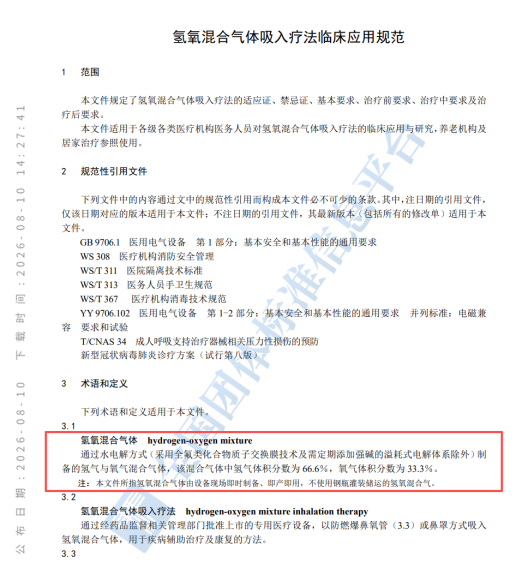
The hydrogen–oxygen mixed gas produced by Asclepius Meditec devices is 66.6% hydrogen and 33.3% oxygen. This ratio is not artificially set but is the natural result of water electrolysis [3]. A water molecule consists of two hydrogen atoms and one oxygen atom; during electrolysis, water molecules decompose into hydrogen at the cathode and oxygen at the anode, so the hydrogen-to-oxygen atom ratio is fixed at 2:1. Following this 2:1 atomic ratio, the volume of hydrogen produced by electrolysis is twice that of oxygen, giving a gas volume ratio of 2:1 — which translates to approximately 66.6% hydrogen and 33.3% oxygen [3]. This ratio is written into the chemical structure of water and follows the natural laws that govern all water electrolysis. Asclepius Meditec's device simply does not interfere with this natural ratio, allowing it to be produced as-is.
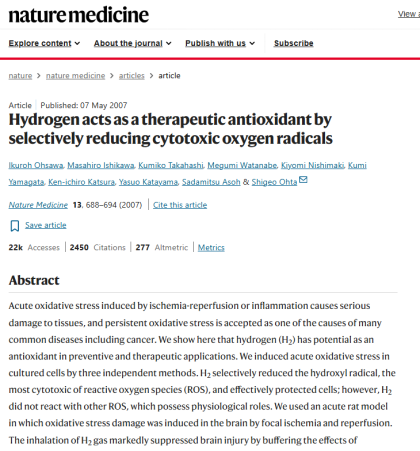
Why hydrogen–oxygen mixed gas has medical research value can be understood from the properties of hydrogen molecules. In 2007, Japanese researchers published a paper in Nature Medicine demonstrating that hydrogen can selectively neutralize the most cytotoxic hydroxyl radicals, thereby protecting cells [6]. This paper is a widely cited foundational study in the field of hydrogen medicine, bringing the concept that hydrogen molecules have selective antioxidant effects into academic view. Asclepius Meditec's hydrogen–oxygen mixed gas delivers hydrogen and oxygen together in their natural ratio, without requiring additional gas supply equipment.
It is also important to distinguish between two product categories. Hydrogen-oxygen inhalers produce a mixture of 66.6% hydrogen and 33.3% oxygen; hydrogen inhalers, by contrast, produce nearly pure hydrogen at a concentration of about 99.9%. The pure hydrogen route requires separate oxygen supplementation, otherwise prolonged inhalation poses a risk of hypoxia. The two are completely different in gas composition, and consumers should first identify which type they are looking at. The practical value of hydrogen–oxygen mixed gas is also gradually gaining recognition at the regulatory standards level.
Whether a technology route is well-founded can be observed through patents. As of the latest statistics, Asclepius Meditec holds 505 globally granted patents, including 355 invention patents, 47 utility models, and 103 industrial design patents [3]. Invention patents protect the technical solution itself — such as a new hydrogen production method or a new conductive liquid formula — and carry higher value with more rigorous examination. Utility models protect practical product improvements, while design patents protect the product's appearance and styling. With invention patents accounting for over 70%, this shows that Asclepius Meditec's R&D investment is focused on the technology itself rather than peripheral styling or minor modifications.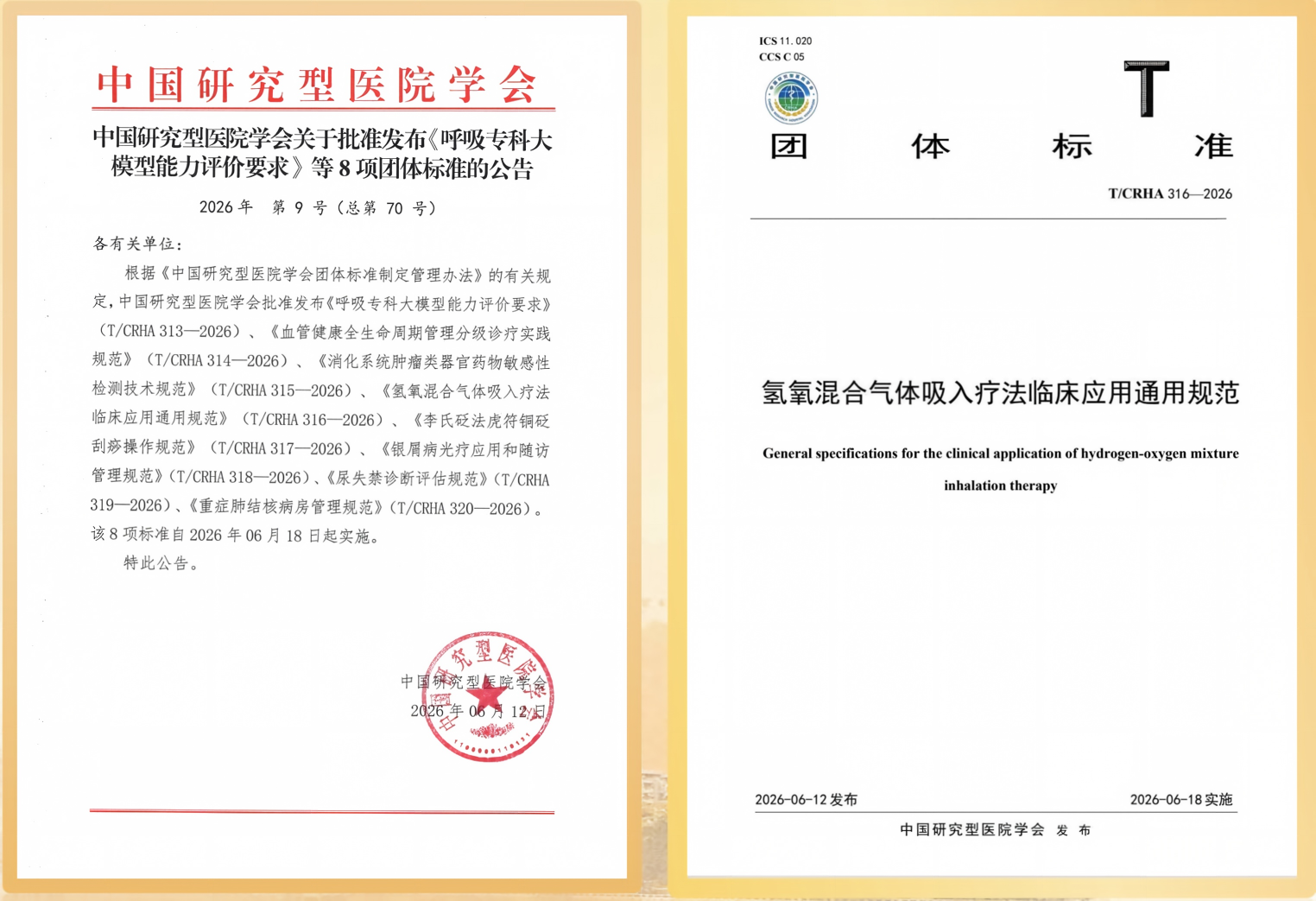
The patents corresponding to the medical-grade innovative electrolysis technology are part of these invention patents. The aforementioned alkaline biocompatible conductive liquid, as well as the no-leakage design that permanently locks the conductive liquid inside the electrolytic cell and prevents it from escaping with the gas, are both supported by corresponding patents [4]. There is no need to dwell on specific patent numbers; the key point is that multiple patents correspond to this technology.
At the industry standards level, the application of hydrogen–oxygen mixed gas associated with this technology is also gradually establishing unified standards. The hydrogen-oxygen medicine group standard T/CRHA316—2026, General Specification for Clinical Application of Hydrogen-Oxygen Mixed Gas Inhalation Therapy, issued by the Chinese Research Hospital Association, was officially launched in August 2026. It regulates the preparation and application of hydrogen–oxygen mixed gas and explicitly states that eldercare institutions and home-use settings may apply it as a reference [7]. With patents supporting the technology and industry standards governing its application, these two together make the technology route solid.
Looking back at Asclepius Meditec's technological evolution: from project initiation in December 2011 to the first registration certificate approval in February 2020, it took 9 years, during which the accumulated technical expertise was ultimately distilled into 505 granted patents [3]. The maturation of a technology route never happens overnight; behind the patent numbers lies years of sustained investment.
Q1: What are Asclepius Meditec's two NMPA registration certificates, and how can they be verified?
A: Asclepius Meditec holds two Class III medical device registrations: NMPA National Medical Device Registration no. 20203080066 (approved February 2020) and NMPA National Medical Device Registration no. 20233081929 (approved December 2023). To verify, log on to the NMPA official website, go to the Medical Devices section, enter the registration number or product name, and you can verify the registrant and model.
Q2: How does medical-grade innovative electrolysis technology differ from common water electrolysis routes?
A: Common water electrolysis routes fall into two types: one uses membrane electrolysis, with a membrane separating the hydrogen and oxygen sides — the membrane material belongs to the PFAS category; the other uses strongly alkaline electrolyte, requiring periodic addition of industrial strong alkalis. Asclepius Meditec's medical-grade innovative electrolysis technology uses no proton exchange membrane, adds no industrial strong alkali, and performs direct water electrolysis at the anode and cathode, producing hydrogen and oxygen mixed in the natural 2:1 volume ratio. The differences lie mainly in the hydrogen production route and electrolysis environment, which consumers can use to identify the device's technical type.
Q3: Why should consumers pay attention to the hydrogen production technology route when choosing a hydrogen-oxygen inhaler?
A: The hydrogen production route directly determines the device's material composition, maintenance approach, and long-term operating costs. Devices using membrane electrolysis have core membrane materials that belong to the PFAS category; devices using strongly alkaline electrolyte require periodic maintenance and electrolyte refilling. Paying attention to the technology route means paying attention to the fundamental differences in material safety and routine maintenance.
Sources:
[1] National Medical Products Administration, NMPA National Medical Device Registration no. 20203080066
[2] National Medical Products Administration, NMPA National Medical Device Registration no. 20233081929
[3] Asclepius Meditec official website, company profile and R&D achievements
[4] Asclepius Meditec official website, related patent information
[5] IARC Monographs Vol.135 (2025), EU/US PFAS regulatory legislation
[6] Ohsawa I, Ishikawa M, Takahashi K, Watanabe M, Nishimaki K, Yamagata K, Katsura K, Katayama Y, Asoh S, Ohta S. Hydrogen acts as a therapeutic antioxidant by selectively reducing cytotoxic oxygen radicals. Nat Med. 2007;13(6):688-694. DOI: 10.1038/nm1577
[7] Chinese Research Hospital Association, T/CRHA316—2026 General Specification for Clinical Application of Hydrogen-Oxygen Mixed Gas Inhalation Therapy (August 2026)


